

Blog / Car Maintenance Tips

Blog

All Car Maintenance Tips Toyota National and Worldwide News Toyota Community Events Central City Toyota Breaking News Toyota Information Fun Facts Dealership Information Helpful Tips Philadelphia Toyota Dealer Sale Events Pre-Owned Vehicles Service and Repair TV and Radio Commercials Certified Pre-Owned Press Release Used Toyota in Philadelphia, PA Philadelphia Community Toyota RAV4 Used Toyota Models Auto Shows Best Used Cars Collision Center Fun Facts About Toyota Philadelphia Breaking News Toyota 4Runner Toyota Highlander Toyota models Toyota's hybrid lineup Toyota-certified pre-owned lot Used Car Sales Used Toyota Used Toyota Prius Used Vehicles at Central City Toyota Preowned
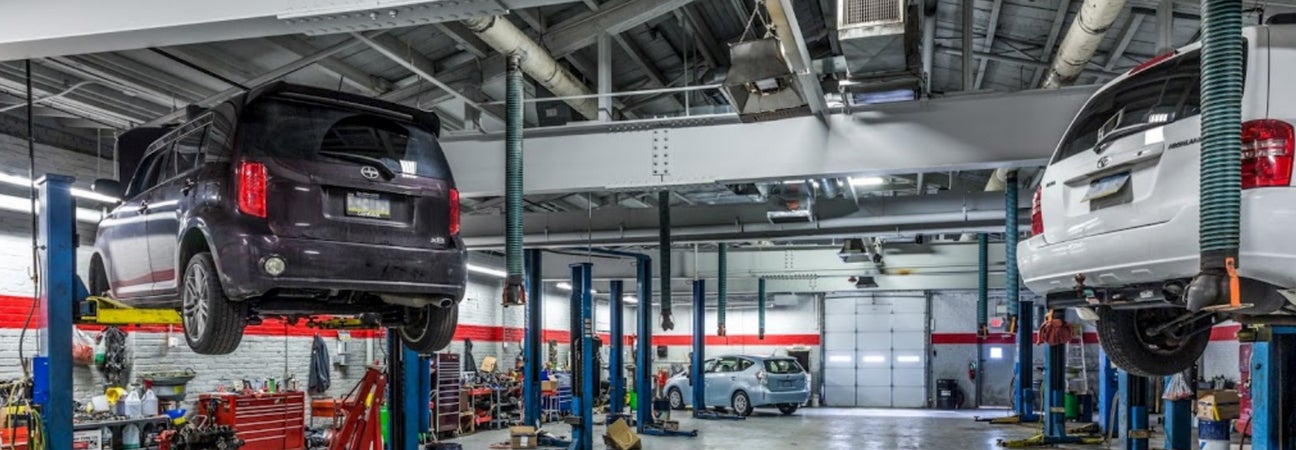
Toyota service center

Common Signs Your Vehicle Requires an Oil Change

Motor oil lubricates your engine and helps all of its components operate efficiently together. Routine oil changes keep your car running smoothly so you can enjoy driving it for years. When your vehicle needs an oil change, you should know, and this post is going to teach you what to look for. Check out the most common signs that your vehicle requires an oil change, and then stop by Central City Toyota where our technicians will get the job done. Common Signs Your Vehicle Needs an Oil Change Oil Level and Appearance Checking the oil in your vehicle is easy enough to do from home. Pop the hood when the engine is cool, pull the dipstick out from the oil reservoir and wipe it on a used towel or T-shirt. Reinsert the dipstick and pull it back out to examine the oil level and its appearance. Clean oil is light brown in color and translucent. Dirty, contaminated oil is dark brown or black and has a sludgy consistency. If your engine oil is dirty or the level is low, it’s time for an oil change. Increased Engine Noise A functioning engine typically won’t make a lot of noise as you travel. When you notice grinding or rumbling noises coming from under the hood of your car, this might be an indication that your vehicle needs an oil change. Because oil lubricates the engine parts and systems, a noisy engine could signal that the components are bumping and wearing against one another, which can result in a damaged engine. Dashboard Warning Lights Both the oil warning light and the check engine light could let you know that your vehicle needs an oil change. One or both of these lights may turn on because oil levels are low or there is a lack of lubrication between the engine parts. Burning Smell If your cabin begins to smell like oil or gas, this could indicate that your engine is overheating and burning dirty oil. At that point, you should schedule an oil change as soon as possible. Get an Oil Change at Central City Toyota in Philadelphia, PA Stop by or schedule a service appointment at our service center if your vehicle is in need of an oil change, and learn how to check your oil from our technicians. Don’t forget to redeem Toyota service coupons during your next appointment to receive deals on a number of our services. Call our service center for more information.

city

Tips for City Driving

Though most large cities like Philadelphia offer public transportation opportunities, there are still times when you need to get yourself around. Driving on the busy streets can be tricky, making things like driving safely and saving on gas a little more of a challenge. If you live in a big city and want to better your driving conditions, the following advice could help you the next time you're behind the wheel. more Pick a Lane, and Stick to It All too often, when you're on a highway that's packed with traffic, you'll see drivers who are switching back and forth to the lane that they think is moving faster. While it may feel like you're getting there faster when you do this, you're really only cutting down your trip by mere seconds, if at all. Instead, pick a lane and stick to it. You'll decrease your chances of a collision, and you won't have to gun your engine and waste gas like you would if you were constantly changing lanes. Have Your Brakes Maintained Stop-and-go traffic and repetitive heavy braking can quickly wear down your car's brakes. By having this system of your car properly maintained by a professional, you can better your safety when driving in the city. Have your brake pads replaced appropriately and your brake fluid checked to ensure that your car is braking as efficiently as possible. Increasing Your Fuel Efficiency One of the best ways to increase your fuel economy when driving in the city is to ease into your acceleration when coming out of a stop. Chances are, you're just going to have to stop again in another few feet, either at a red light or when in traffic, so what's the point of getting there any faster? Gently pull out of stops when the light turns green and coast when possible. Your fuel efficiency can increase when you take this extra effort. Have Your Air Filters Replaced Another way to keep yourself safe when behind the wheel that's not so obvious is having your air filters replaced. Cities are notorious for smog, which you are especially subject to when you're sitting in traffic behind large trucks and trailers. Have your car's air filters replaced to protect you from these fumes as much as possible. Invest in a Car That's Ideal Not all cars are great for driving in the city, which is why it's so important that you buy a car that's best for this type of driving. Consider the size of the vehicle, as many inner-city streets and parking options are not typically "big car friendly." Also, look for park assist technology, so that you can parallel park and pull out of tight spots with ease. Lastly, search for a vehicle that has theft-prevention options, so that your car is not as vulnerable when you're away. Next time you find yourself weaving through the busy streets, remember these tips. You might find that your commute is a little safer and efficient, as well as a lot less stressful. Image by 12019, used under CCO 1.0

savings

5 Ways to Save on Car Expenses

Owning a car is a large financial responsibility. In fact, AAA estimates that a car costs around $8,558 a year in upkeep. However, there are easy and simple techniques to save on car expenses. If you're looking for ways you can save money when it comes to your car, keep reading for some helpful tips. 1. Use Apps to Save Money on Gas If you're looking to save money on gas, consider using an app or website that shows you the gas prices of stations around you. Just remember, you shouldn't drive to a cheaper gas station that's out of your way. Try to combine all your errands when you're driving so you don't have to make extra trips. more 2. Change Your Driving Habits Another way to save money on gas is to change the way you drive. Rapid acceleration, hard braking, and speeding will quickly waste gas and can lower your gas mileage by 33 percent on the highway. Your gas mileage also decreases every time you drive over 50 miles per hour. Finally, if you're parked and waiting, you'll save more fuel if you turn off your car. Restarting your car uses about 10 seconds worth of fuel while idling can use up to a half-gallon of fuel every hour. 3. Reconsider Your Insurance Needs There are multiple ways to save on car insurance if you know what questions to ask. If you work from home or drive less than 5,000 miles a year, see if your insurance company offers a discount. Also, ask your insurer about bundling policies. Insuring your house and car with one company could save you around 10 percent a year. Don't forget to mention safety features in your car and home, such as air bags and smoke detectors, which can get you additional discounts. 4. Learn Basic Car Maintenance While there are certain maintenance tasks that are better left to the professionals, there are also ones you can easily do on your own. When you complete these maintenance tasks on your own, you only have to pay for the cost of the parts and you save on labor. For example, it's very simple to change the air filter in your vehicle, and this will keep your engine clean and improve fuel economy. Check your local dealership for the parts you need. 5. Read the Manual for Maintenance Timeline When you do need to take your car to a professional for maintenance, make sure you read the owner's manual so you know what needs to be completed and when. While conventional wisdom states that a vehicle's oil needs to be changed every 3,000 miles, newer cars and synthetic oils can easily get between 5,000 and 10,000 miles before needing an oil change. By following the correct oil change schedule recommended for your car, you can save around $30 for each change. Whether you're looking for tips on how to save on gas or routine car maintenance, these techniques can help you save on car expenses. Image by stevepb, used under CCO 1.0

Toyota Buckle Up

Stay Buckled Up During The Summer

Summer; the time for camping, s'mores or water fun. However you prefer to enjoy your vacation time, it's likely you're driving there one way or another and it's important to stay buckled up, especially for those little ones. A surprising three out of four car seats are incorrectly installed so it's always a good idea to make sure your children are strapped in tight. Here are several tips to ensure your drive is comfortable and safe: http://toyota.us/1OPpp6I

Ardmore & Central City Toyota host successful New Owner Celebration

On Thursday April 18th, 2013, Ardmore Toyota & Central City Toyota hosted a celebration for all new owners. With a fully catered buffet from Hymies, customers had the opportunity to meet the Service Directors of both Ardmore & Central City, as well as the Technicians and advisors. Some customers won prizes and all left with a goodie bag. Customers learned about vehicle maintenance and technology during the celebration. Do you want to attend a future New Owner Celebration? Email us at events@ardmoretoyota.com to find out more. Thank you to the over 60 new owners of Toyota models who came to the celebration!

All Cracked Up – Repair Your Windshield

We’ve all been there, you’re driving down a rocky road, and a small stone is kicked up and kits your windshield. Often, these small rocks don’t do any damage – they just give us a fright – but today was not your day. In the blink of any eye, a star shaped crack appears in your windshield. It looks small now, but an unattended start-shaped blemish can, over time, develop into a big crack that reaches across the length of your windshield. Not only is a crack distracting to the eye, but it is also dangerous, as it compromises the strength and integrity of your protective windshield. Though there are countless companies can fill and repair the “star”, it’s best to visit your dealer. They will do a thorough assessment of the damage and fix it properly, while ensuring that your windshield is returned to its pre-damaged state. Plus, if your windshield should need to be replaced, your dealer can order the proper replacement for your specific make and model.

Safety First: Always Wear Your Seat Belt!

All major vehicle manufacturers spend millions of dollars on the development of safety essentials for their vehicles. And, not surprisingly, quite a bit of attention is paid to the innovation and testing of seat belts. The basic task of seat belts is to keep passengers from hitting objects within the car on a sudden stop or collision, or, even worse, from being ejected. By now, we have all heard the phrase “Click it or Ticket”, but have you truly taken to heart the importance of your seat belt? Even the very best seat belt design could still require your attention. First and foremost, it’s vital that all your seat belts are in working order. Take note: Do they bind when you try to put them on? Do they take a few tries to get a good click? Is the harness material frayed? If your seat belts need some work or replacement, take your vehicle to your dealer. They will have all the proper parts that your particular make and model needs. One major function of your car is to keep you safe while you travel, so be sure that your seat belts are in good shape!

What to Expect at Inspection

If the sticker in your window indicates that it’s time for inspection, it’s time to give your dealer a call and schedule an inspection appointment. Your dealer and their trained technicians know your vehicle inside and out, and will know how to best inspect it to ensure many more years of safe, secure driving. If you’re wondering exactly what your dealer will look at during inspection, review the following list: Tires: Your car will be checked to make sure you have matching tires and enough tread life to allow the car to be driven safely, and if your tires fail, it’s a great time to have them replaced! Windshield and wipers: Even a minute crack or chip in a windshield can be a big distraction possibly compromise safety. Also, your wipers will be checked for operation, and also the condition of the blades will be checked. Brakes:  Your brakes, drums, and rotors will be checked for service life, while hoses and break lines are checked for leaks. Steering mechanisms: Your steering mechanisms will be checked for safety. Any movement or play in steering components could lead to failure, as ball joints and connecting rods become lose, worn, or bent requiring replacement. A simple tire alignment may be suggested to correct the problem and assist in better gas mileage. Lights and signals: Your headlights will not only are checked for operation, but will be reviewed to ensure that they are at the proper illumination level. Also, all other marker lights, emergency flashers, and turn signals will be reviewed for proper operation. Basic safety check: Lastly, your dealer will look for leaks and observe conditions of basic components on your car. Your dealer can alert you to anything noticeable that could affect your safety and the operation of the vehicle. Remember, your dealer will not steer you wrong. Their goal is to keep both you and your car safely on the road for as long as possible.

Give Your Battery a Check-Up

Though the car batteries of today are “maintenance free” car batteries, it does not mean that they will last forever. Just like all other aspects of your car, it’s important to ask your dealer to review your battery from time to time to ensure that your vehicle will continue to start reliably. By asking your dealer to occasionally give your battery a check-up, you’ll ensure that you never find yourself stuck without starting power. Though our car batteries are not something we think of as often as our tires or our brakes, they are definitely a feature worth considering and servicing to maintain a reliable, safe car.

What Our Cars Offer Us: Comfort, Entertainment, and Safety

When you purchase a car, it’s not to merely get you from one place to another. We also turn to our cars for comfort, and at times, even entertainment. As we cruise in our vehicles, we relax into our plush seats, often with a beverage in the cup holder, and our favorite music playing over the speakers. As you enjoy all the aspects of your vehicle, it’s important to never overlook safety – another important element we always consider when purchasing a car. Whenever you drive, make certain that your mirrors are adjusted so that you can always see any vehicles that may be behind you or to your sides, and also make sure that the music is never so loud that you cannot hear emergency vehicles or other warnings, such as a honking horn. Also, though you may be tempted to do so, do not multitask while driving – don’t play with the radio while you’re drinking your coffee! Your vehicle is meant to be both enjoyed, and respected -- so, always make it a top priority keep yourself safe, while you cruise around town!

What To Do When Your Check Engine Light Comes On

What do you do when you start your car, and see that your check engine light is illuminated? If you’re the type that instantly begins to worry about what it will cost you, take a deep breath! Today’s cars have highly-advanced monitoring systems that continually check your vehicle’s health, and a simple visit to your dealer can easily reveal the issue – perhaps a gas cap is not screwed on tightly, or a painless maintenance issue has been over-looked for a bit too long. If the light is on, it’s a good time to revisit your owner’s manual for additional information and ideas about what the issue could be. Keep in mind, however, that a blinking check engine light could indicate a more serious problem such as a loose oil cap or a hazardous condition that could ultimately ruin your engine. Though you need not panic if the light comes on, it is a time to check-in with your car’s health. Next time that little light illuminates, head on over to your dealer to keep your car healthy, and to ensure the safety of you and your passengers!

Fix That Broken Mirror

We all know that our car’s mirrors allow us see around blind spots, and serve to keep us safe when we are driving. Given their position on our vehicles, mirrors are particularly vulnerable to minor accidents and scraps as we navigate our way through the world. Perhaps, you’ve even had a time when you returned to your car to find that your mirror was broken or damaged. If so, put that duct tape away, and head on over to your dealer. Your dealer will be able to order a replacement mirror, and will also be able to install it as per the factory specs. Having a proper, functioning mirror will protect you and your car, and will also prevent moisture from getting inside of the door. Driving with a damaged mirror could lead to more problems, such as inspection failure, or even worse it could fall off, and hit another vehicle at high speed. Don’t engage in risky behavior, instead, contact your dealer and have them fix your damaged mirrors today!

Contact Us

Fill out this form below and we'll contact you shortly
*Required Fields