

Your Toyota relies on various fluids to keep its systems functioning efficiently. These liquids serve many functions, such as lubricating moving parts and preventing overheating, and are essential for the upkeep of your car’s health and performance. Regularly checking and maintaining fluid levels helps avoid costly repairs and ensures your vehicle runs smoothly for years.
Why Routine Fluid Checks Matter
Ignoring your Toyota’s fluid levels can lead to serious issues under the hood. Low or contaminated fluids can cause components to overheat, wear down, or fail entirely. By performing routine Toyota fluid checks, you can catch potential problems early and extend the life of your vehicle.
Essential Toyota Fluid Checks
Engine Oil
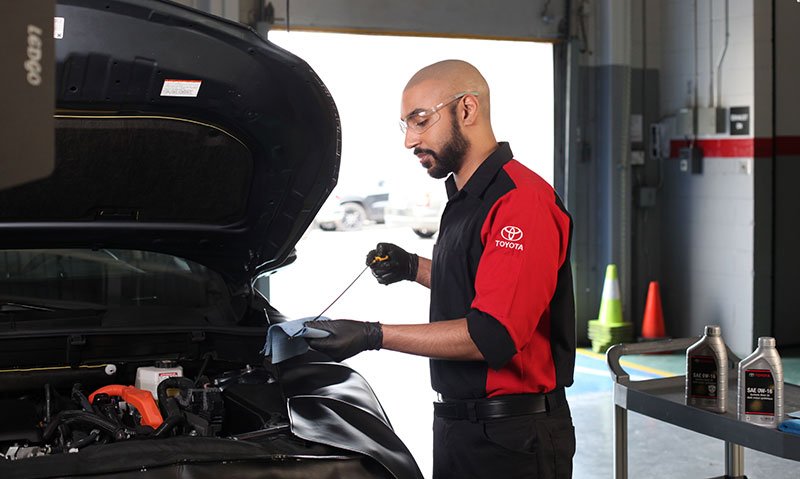
Toyota engine oil lubricates internal components, reduces friction, and prevents overheating. To check your oil:
- Locate the dipstick, pull it out, and wipe it clean.
- Reinsert it fully, then remove it again to check the level.
- The oil should fall between the minimum and maximum markers.
Dark or gritty oil may indicate contamination, while consistently low levels could signal a leak.
Coolant (Antifreeze)
Coolant helps regulate your engine’s temperature and prevents overheating. To inspect your Toyota coolant levels:
- Wait for the engine to cool before opening the hood.
- Locate the coolant reservoir and ensure the level is between the low and full lines.
- Discolored coolant or a sweet smell could indicate contamination or a leak.
For optimal engine performance, schedule a coolant flush at Central City Toyota.
Brake Fluid
Toyota brake fluid transfers the force from your foot on the pedal to the braking system. To check it:
- Locate the brake fluid reservoir in the engine bay.
- Ensure the fluid is clear to light yellow and within the recommended level.
- Dark, dirty fluid or a spongy brake pedal could mean it’s time for a brake fluid flush.
Our certified Toyota technicians in Philadelphia can check your brake fluid and ensure safe, responsive braking.
Transmission Fluid
Transmission fluid keeps your gears shifting smoothly and prevents overheating. Depending on your Toyota model:
- Some vehicles have a dipstick for checking fluid color and level.
- The fluid should be amber or red, not dark brown or burnt-smelling.
- If your transmission feels sluggish, it may need servicing.
For Toyota transmission service in Philadelphia, trust Central City Toyota’s expert team to keep your vehicle running smoothly.
Identifying Fluid Leaks and Contamination
Leaks and contamination can impact your Toyota’s performance. Signs of trouble include:
✔ Puddles under your car – Different fluids have distinct colors (e.g., green for coolant, red for transmission fluid).
✔ Unusual smells – A burnt or sweet smell could indicate a fluid issue.
✔ Dashboard warning lights – Alerts may signal low fluid levels or system malfunctions.
If you notice any of these signs, schedule service with a certified Toyota technician to prevent further damage.
Trust Central City Toyota for Expert Fluid Maintenance
While DIY fluid checks are helpful, professional Toyota maintenance ensures everything is properly inspected. Our certified service team can:
🔧 Perform in-depth fluid checks
🔧 Flush old, contaminated fluids
🔧 Identify leaks before they become costly repairs
Keep your Toyota running smoothly with expert maintenance from Central City Toyota in Philadelphia. Schedule a service appointment today!
Connect with us


Recent Blog Entries
- A Familiar Sign, A New Chapter: Introducing Central City Toyota Collision Center
- The Real Cost of Buying a Used Vehicle and How to Prepare for It
- Best Used Toyota Gas Mileage: Which Model Should You Buy?
- 5 Fun Facts About Toyota That Will Surprise You
- Max Paul’s Continued Investment in Education and Workforce Development Creates Career Pathways for Philadelphia Students