


Candy Corn: One thing is for certain, it just wouldn’t be Halloween without candy corn! The classic choice! You’ve got a timeless sense of style, which means you and the Accord are meant to be.
Toasted pumpkin seeds: Watch out– a no-nonsense person like you should be cruising in a truck! You are sharp, tough, and you don’t sugarcoat anything.
Sugar Daddies: Looking for a sweet fix that’s sure to “stick around?” You deserve a ride that you can count on for years to come! The Civic is the car for you!
Caramel Apples: Not only are you fashion-conscious, you’re a ton of fun and always up for trying something new! Your biting sense of humor makes you a treat to be around. You belong behind the wheel of a Pilot.
King-Sized Candy Bar: You’ve hit the mother-load! A busy schedule like yours requires lots of space—See how the Odyssey fits you.
Check out the Toyota Rav4 and Rubik’s Cube

Already turning heads with its contemporary style and versatility, Toyota’s RAV4 is now putting a whole new twist on what’s next with an engaging social media extension of its “RAV4: Ready 4 What’s Next” interactive marketing campaign targeting Hispanic consumers. The effort features a virtual Rubik’s Cube® that consumers can play online to create their own sharable personalized photo souvenir at www.RAV4cube.com.

On Sunday October 20th, the Philadelphia Inquirer posted a story from Al Haas about the all new & redesigned 2014 Toyota Corolla. “the 2014 edition – in an obvious response to the inroads made by its zingier competitors – is easily the most stylish Corolla ever.”
10 Most American-Made Vehicles for 2014

According to The Wall Street Journal, the National Highway Traffic Safety Administration rankings have concluded that the Camry, Corolla & Tundra Rank In the Top 10 Most ‘American-Made’ Vehicles for 2014.
Top 10 Driving Songs
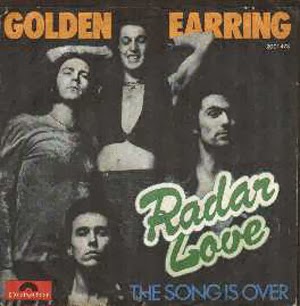
1. Golden Earring – Radar Love (1974)
2. Stealers Wheel – Stuck In the Middle With You (1973)
3. The Cars – Let’s Go (1979)
4. Derek and the Dominos – Layla (1972)
5. John Mellencamp – Authority Song (1984)
6. Wall Of Voodoo – Mexican Radio (1982)
7. Billy Ocean – Get Outta My Dreams, Get Into My Car (1988)
8. Beatles – Drive My Car (1966)
9. Beach Boys – Little Deuce Coupe (1963)
10. Eagles – Take It Easy (1972)
5 things your car will finally do in 2020!
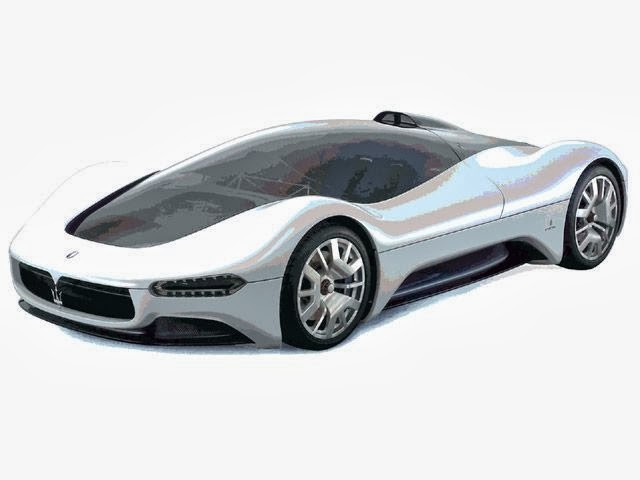

By John Brandon
We’ll spare you the far-future posturing and flying-car jokes, but the truth is — for the 200 million automobile owners in America, the future looks bright. In fact, we’ve already made some pretty impressive headway. The 2008 Mercedes S-Class can change lanes on the highway automatically, and both the Toyota Prius and the Lexus LS-460 can self-park at the push of a button.
But that’s just a drop in the bucket compared to what’s in the works. With eyes wide and mouths agape, we peeked under the curtain at the cars of the future. Here’s what we can tell you about what you’ll be driving in 2020.
1. Your car will predict the future
Self-parking cars are great and all, but there’s a big difference between features of convenience and the kinds of safety technologies on the horizon. We’re talking about cars that can see into the future and react on a dime — whether that means detecting a person crossing the street or swerving to avoid oncoming traffic.
There’s no doubt the artificial intelligence required to protect you from those dangers is incredibly sophisticated, but it’s becoming more widely available every day. Vehicles equipped with hundreds of sensors will be able to monitor their surroundings, both from a short-range perspective (to detect things like barriers and stop signs) and a long-range perspective (to detect things like a truck barreling toward you). But they won’t be working alone.
Cars of the future will also utilize video monitors located at intersections. Currently planned for many towns and cities across the United States, these monitors will feed data to your car over a wireless network. From as far as 30 miles away, they’ll be able to transmit video imagery right to your dashboard. So, if you didn’t see that pedestrian walking into the street, the video system would know where you were, know about the pedestrian, and warn you to pay attention.
It’s similar to Google’s new Street View maps system. Already available in larger cities like San Francisco and New York, the application shows fluid, 360-degree video images of nearly every block in the area. And while it’s only accessible from computers now, similar real-time images will soon be available right on your dash.
Taking the concept one step further, engineers also plan to equip cars with computer processors that can analyze these kinds of video feeds to assess abnormalities in traffic. So rather than just warning you of an upcoming obstacle in the road, cars will use the data to deploy airbags at just the right location within the vehicle. Or, they could decide to take over the steering when needed.
Basically a smarter version of the existing Electronic Stability Control feature (available on several luxury car models now), the cars will monitor weather and traffic, and adjust tire speeds to make sure you stay on the road and don’t flip the vehicle. How long ’til everyone on the block has one? The system will be required on all new U.S. cars for the 2012 model year, but you should expect to see it even sooner than that.
2. Your car will talk to the road and the road will talk back
It’s one thing to have a car that senses other vehicles, but something else entirely to have the road itself know where your car is at all times. To make that possible, city governments and automakers are joining forces to launch new Dedicated Short Range Communications (DSRC) systems. Using short-range wireless signals, vehicles will be able to communicate not only with each other, but with all the infrastructure on the road.
Transportation agencies in cities across America currently have plans to install DSRC technology at major intersections and high-accident areas. In response, major auto manufacturers will offer DSRC support for their cars.
The communication network will monitor where cars are traveling, as well as read traffic-light information and road-sign sensors. With both cars and roadways enabled, formerly unimaginable safety benefits will become a reality. For instance, ambulances will be able to trigger upcoming traffic lights to change from red to green.
But there are plans to go even further. According to DaimlerChrysler, old satellites (accurate to about 3 feet) could be replaced with much more powerful Global Positioning System (GPS) satellites, which could pinpoint your vehicle to a few centimeters. And while there are only 30 active GPS satellites in space today, engineers hope to have as many as 50 in the future.
The new system will be able to track weather conditions and suggest alternate routes. For example, you could avoid a tornado in Kansas or damaging hail in Fargo, or loop around Chicago traffic using real-time data that’s continually updated.
3. Your car will take itself into the shop for maintenance
Having wireless networks set up along the roadways — such as those necessary for seeing images of upcoming intersections — translates to endless possibilities for cars and drivers in the future. Example: Imagine passing a maintenance station that remotely signals your in-car navigation system that it’s time for an oil change. Better yet, it could go ahead and wirelessly upgrade your car’s software modules or check the performance of its safety sensors.
Perhaps even more exciting are the possibilities for electric hybrids. Once electric cars outnumber gas-engine cars, satellite-based wireless power systems could recharge vehicles from space. How’s that possible? The satellites would gather solar energy from space and then transmit the power to a receiver on the vehicle via a wireless signal. It would work the same as a wireless computer network, except the signal would carry energy instead of data.
4. When you drive through McDonald’s, your car will be debited, not your VISA
Microprocessors are already embedded into many parts of an automobile — from an engine’s control-valve timing system to the seat controls. So why not have a microprocessor that manages financial transactions? Several states already offer special debit cards that mount to your windshield as you pass through a toll, but those are primitive compared to what’s to come.
In the future, when you pull into the drive-thru at a fast food restaurant, a local Wi-Fi network will be able to communicate with your vehicle by way of an encrypted wireless signal. In other words, after you order your food, the car will automatically make the financial transaction. And the electronic signature? It’s likely that the navigational systems in your car will have expanded beyond route planning and safety warnings into something involving a signature pad that would allow you to type in a passcode (or use a fingerprint or eye retina scan) as an electronic signature.
Once the infrastructure is in place, your car will become like a mini-ATM for drive-thru establishments. Of course, whether or not that’s a good thing for your budget remains to be seen.
5. Go ahead, take a nap. Your car will drive itself
Futuristic cars tricked out with their own ATMs and self-maintenance features sound nice, but for many engineers, that’s just the tip of the iceberg. The real holy grail? A fully automated, driverless car.
Shining a big spotlight on such efforts is DARPA (the Defense Advanced Research Projects Agency), a Department of Defense organization aimed at perfecting the robotic technology needed for safe, autonomous military vehicles.
In 2005, Stanford robotics expert Sebastian Thrun won the DARPA Grand Challenge with his autonomous car, Stanley. Although the competition is aimed at developing machinery to protect soldiers, Thrun believes the technology will reach civilians sooner than you might think. And driverless cars, he believes, could save thousands of lives each year.
In June 2007, Thrun’s new robotic roadster, Junior, completed several test runs in preparation for the DARPA Urban Challenge (scheduled for November 2007). Although Junior never went faster than 15 mph, it made a three-point U-turn and navigated through a four-way stop. That’s right; Thrun is getting close to achieving a fully automated, road-ready car.
Where could this lead? Well, a highway system for starters — say, from San Francisco to Los Angeles — for driverless vehicles only. Using a wireless signal, barriers on either side of the road could communicate with cars to keep them on track. And vehicles could simply use older cruise-control technology to maintain steady speeds.
Conceivably, this would allow drivers to sleep through long stretches of highway — or at the very least read the morning paper and drink their coffee. Another advantage is that these routes could have less restrictive speed limits — likely well over 100 mph — which could redefine the morning commute for many.
( Source: http://bit.ly/14PIxh5 )

The redesigned Toyota Corolla achieved “good” ratings in the Insurance Institute for Highway Safety’s tests for occupant protection in four of five evaluations, achieving a Top Safety Pick rating. IIHS evaluates vehicles for performance in a:
1. moderate overlap front crash
2. side impact
3. roof strength/rollover
4. head restraints & seats/rear impact
5. small overlap front crash
To view the IIHS report on Corolla, go to: www.iihs.org/iihs/ratings/vehicle/v/toyota/corolla
Into the Unknown for Toyota Racing!

Get ready to cheer on TOYOTA Racing as they head Stateside this weekend! Get the details here.
Toyota Avalon Adds Fuel-Thrifty Hybrid

Not only does the Avalon Hybrid provide comfortable seating for five, with a roomy back seat, the new hybrid is rated by the federal government at 40 miles per gallon in city driving and 39 mpg on the highway – the best of any Avalon ever. Also noteworthy: The 2013 Avalon overall is listed as a recommended buy of Consumer Reports magazine, which says predicted reliability should be above average.
Click here to read the full story that appears in the Philadelphia Inquirer: http://bit.ly/1fQPNLi
40 Million Happy Customers and Counting; Corolla Remains Best-Selling Nameplate in History

Have you ever owned a Toyota Corolla? If so, you’re one of 40 million people who have purchased the best-selling automotive nameplate in history.
Corolla reached the 40-milllionth sales milestone this month after 47 years on the market. In 1966, Toyota began assembling 300,000 Corollas annually at a new Takaoka, Japan factory. Over the years, Toyota has evolved the Corolla to reflect our customers’ needs and that commitment continues today.
For a complete Corolla history, please visit: www.toyota-global.com/showroom/vehicle_heritage/corolla.
To view Toyota’s North American passenger car chronology, please go to: http://bit.ly/1fzY9XL.
Further information on Corolla’s 40-millionth sales milestone can be found at: http://bit.ly/15zQiuh.
Connect with us

